Introduction

Statistics
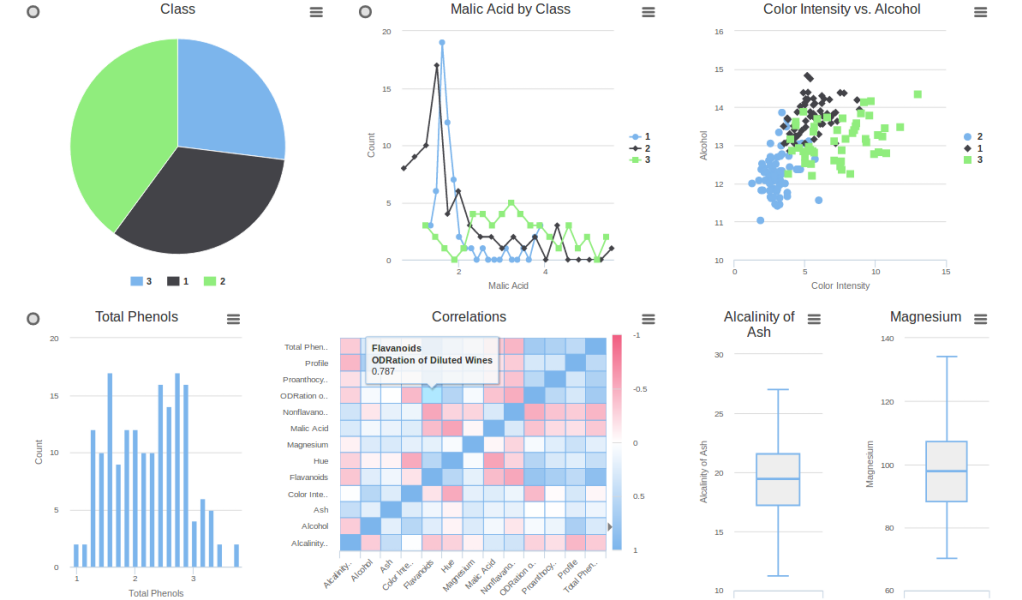
Ada allows users to conveniently explore and filter data, and calculate various statistics with embedded interactive visualizations, for instance, categorical and numerical distributions, scatters, correlations, and box plots.
Moreover, one of Ada's main functionalities is to produce dynamic and personalized
Data
Ada supports diverse data sources from clinical, research, and experimental origins. It is designed to handle heterogeneous data sets of varying sizes and structures, making it suitable for a wide range of data exploration and analysis tasks.
Ada facilitates robust access control through LDAP/OIDC authentication, and in-house user management with fine-grained permissions. With a convenient user management UI, admins can simply specify which data sets a user is allowed to access and which actions on the data set he/she is allowed to perform.
Metadata
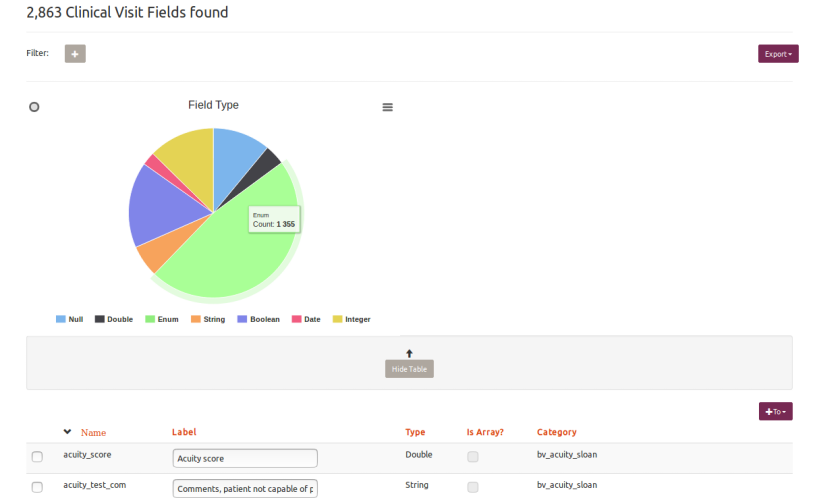
To define data set’s metadata Ada provides an editable dictionary, and a categorical tree with drag-and-drop manipulation.
Ada supports many data field types including number, date, boolean, enumeration, and json. These (collectively called
Import/Export
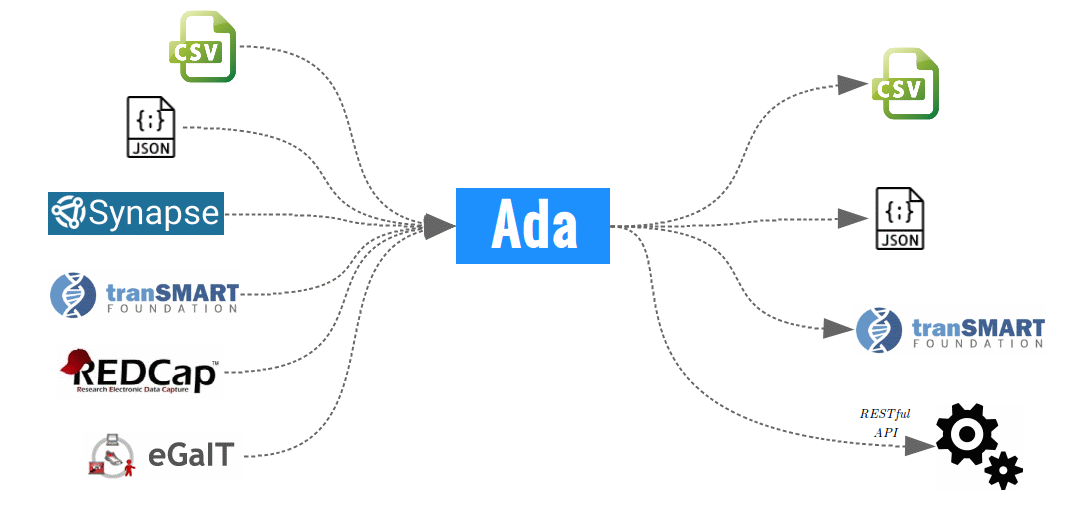
The data set import adapters currently support three file formats: CSV, JSON, and tranSMART data and mapping files, and two secured RESTful APIs: REDCap and Synapse.
Any data sets provided from these sources can be added to (or removed from) Ada on-the-fly as well as scheduled for periodic execution. As such, Ada has potential to serve many translational medicine or any data exploration endeavors. For post-processing, filtered data can be exported into CSV, JSON, or tranSMART format.
Machine Learning
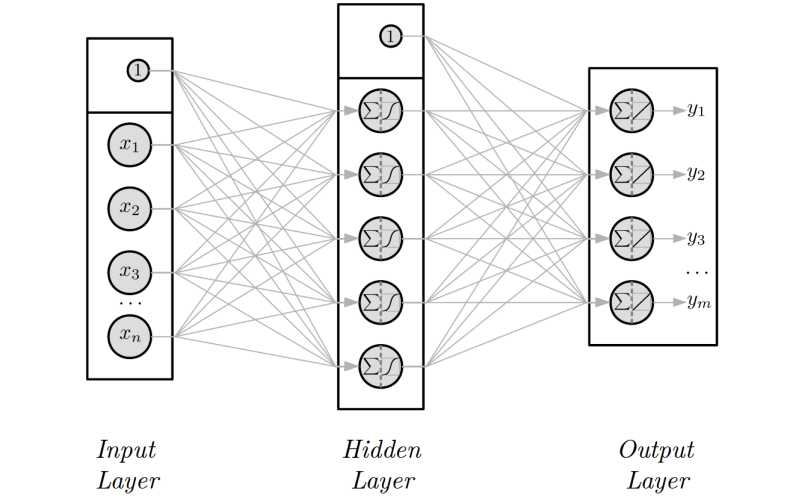
For more advanced analysis, well-grounded machine learning and statistical approaches were integrated using Spark ML library. This covers a wide variety of classification, regression, clusterization, feature selection, normalization, and time-series processing routines.
Ada is available for registered users only. If you wish to use Ada request an account.